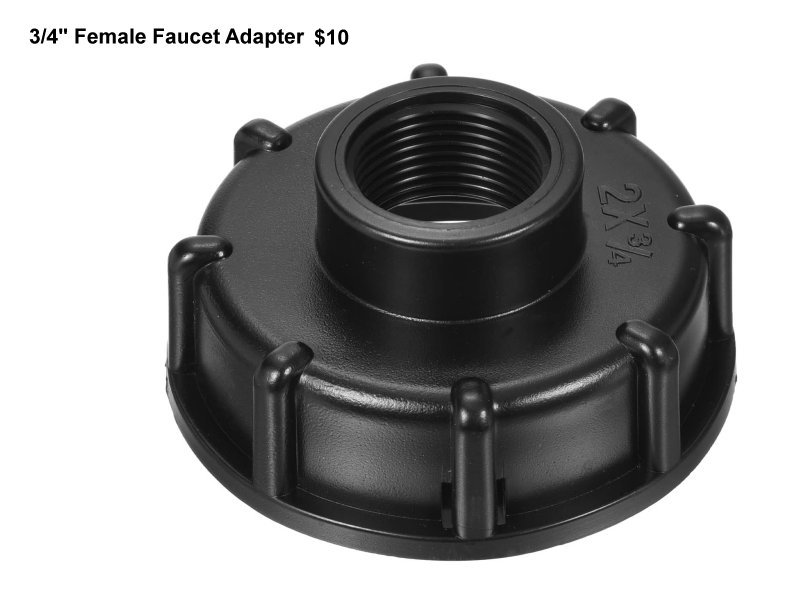
|
Cleaning IBC (Intermediate Bulk Container) Totes
|
|
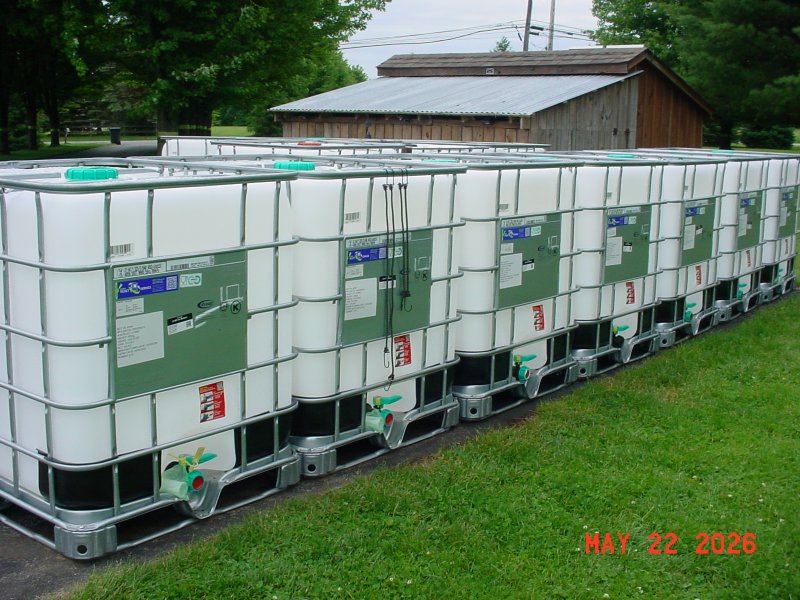
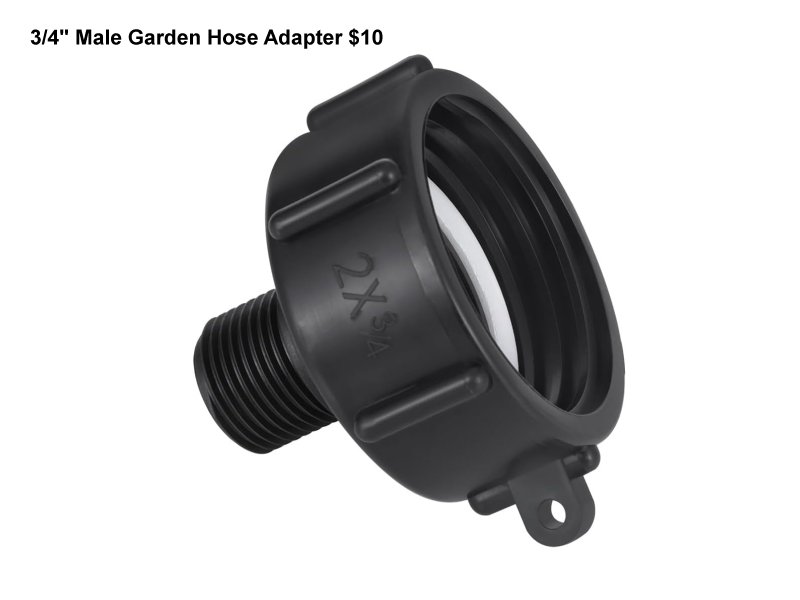
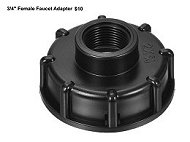
Coarse Threaded Main Valve
|
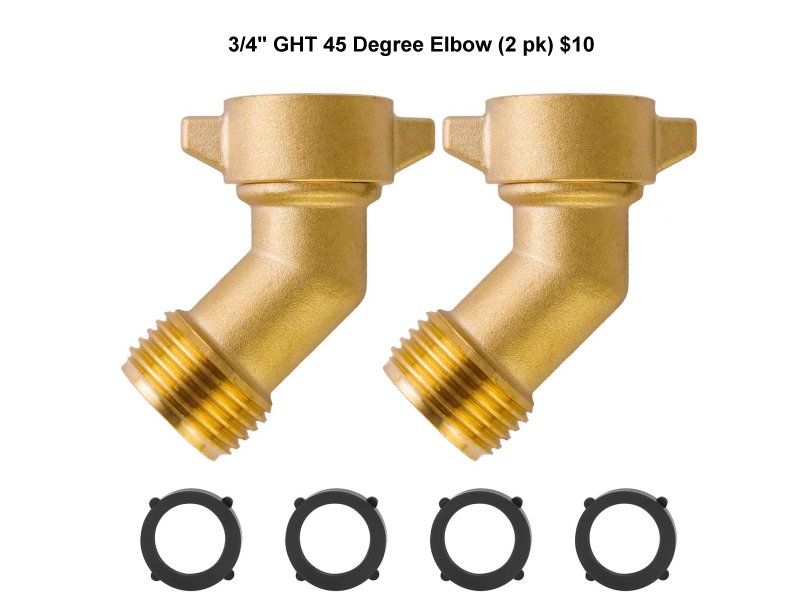
3/4" High Flow Ball Valve
|
Tote Cap With Filter
|
Our totes originally contained food grade castor oil, coconut oil, vegetable glycerin or similar food grade oils. Oils inside a plastic container are hard to remove entirely where the oil residue left behind must be expected to dissipate over time. Stronger grease cleaning agents would not be good for the tote container or the tote future content or purpose. A pressure washer does help to some degree and the wand is not able to reach inside at an angle to clean the top and top sides of the tote. Due to the residue issue is another reason why only food grade totes are exceptable for human, animal, and plant consumption or purposes.
Unfortunately, draining a tote is not an easy chore. The tote base is not designed to completely drain the tote content - who knows why. You must tilt the tote slightly forward to sweep the remaining content towards the drain spout opening manually with a custom long handled brush. Then, rinsing the tote is not an easy chore either. Cleaning the interior with cleaning agents requires custom cleaning tools to reach inside the tote at all angles that requires a lot of bending, lifting, patience, and work. The outside of the tote will usually need a good scrubbing, especially on top. Hence, a tote cleaning fee is well earned and deserved.
|
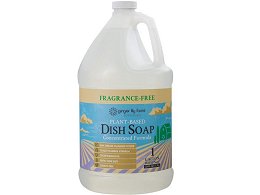
Ginger Lily Farms Dish Soap
|
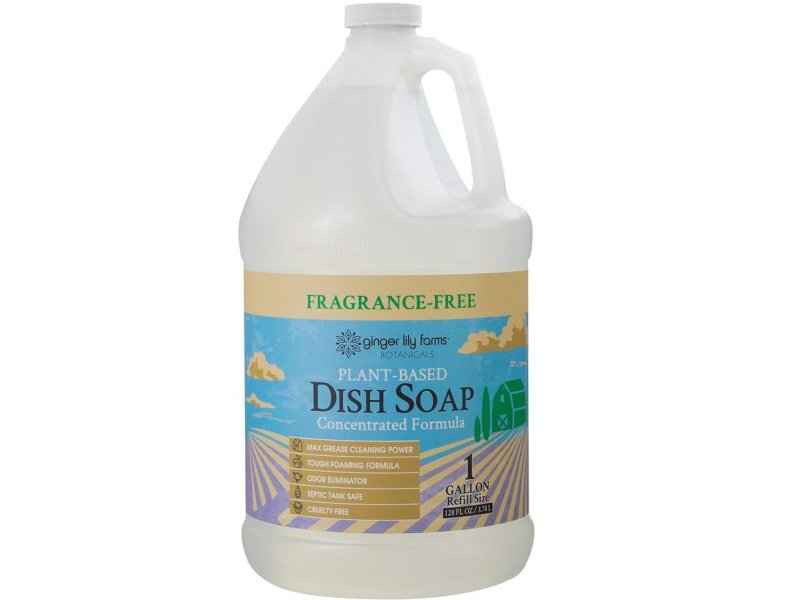
We will completely drain and wipe clean your tote of original content and soak the tote interior with Ginger Lily Farms botanicals plant-based dish soap formula with max grease cleaning power for a small fee. After a thorough rinse, we will remove most or all of the remaining water at the bottom of the tote.
Ginger Lily Farms Botanicals Plant-Based Liquid Dish Soap is a clear concentrated formula with max grease cleaning power, cruelty-free, fragrance-free, 1 gallon refill (128 fl. oz.) and is a clean that is safer for you and the environment! Ginger Lily Farms Botanicals Fragrance Free Plant-based Dish Soap features a tough foaming concentrated formula that easily removes grease, eliminates odors, and is septic tank safe. The liquid formula uses powerful plant-based ingredients to break down tough residue and grease. Free of parabens, phthalates, MEA, DEA, dyes and triclosan. This environmentally friendly dish soap is 100% vegan and cruelty-free so you can feel good while using it. Ingredients are water, sodium lauryl sulfate, cocamidopropylamine oxide, sodium chloride, decyl glucoside, glycerin, aloe barbadensis leaf juice, citric acid, and benzisothiazolinone.
You should never trust or depend on the said claim of content or cleanliness of any tote you see or purchase. You should verify or check for a food grade label and clean the tote interior again yourself before you use the tote for plant watering and sanitize the tote interior for storing or drinking water. A non food grade tote is not recommended for storing or drinking water.
Preventing And Removing Algae Buildup
To prevent algae from growing in an IBC tote, you must block all sunlight from entering the tote, as algae requires light to grow. The most effective methods to help prevent algae growth include covering the tank with a specialized, dark-colored, or UV-resistant tarp or cover, painting the exterior with dark, opaque, plastic-safe paint, or using a black plastic wrap.
Custom fit UV Protective Covers for totes are available on Amazon in 210D, 420D, and 600D. Denier (D) is a unit of thread density, ranging from light-weight 210D and medium-weight 420D to heavy-duty 600D polyester or Oxford cloth.
Adding small amounts of unscented liquid chlorine bleach (like Clorox) can effectively prevent and kill algae in an IBC tote, but it requires specific dosing to remain safe for gardening, livestock, or emergency consumption. Use 2–3 ounces of bleach per 50 gallons of water, repeating weekly as it dissipates as needed.
To remove algae from an IBC tote, empty it completely, then scrub the interior using a long-handled brush or broom with a mixture of hot water and soap. For stubborn algae, apply a diluted bleach solution (1 part bleach to 10 parts water), let it sit for 20 minutes, then rinse thoroughly. A pressure washer (4,000 PSI) is ideal for dislodging heavy algae sheets.
Rainwater Filtering
Filtering rainwater is beneficial, particularly for drinking, cooking, laundry, or bathing, to remove contaminants like dust, bird droppings, debris, and atmospheric pollutants. While not always required for irrigation or pumps, filtration improves water quality, reduces odors/discoloration, and protects infrastructure. Proper systems often include pre-filtration and disinfection. Degree of filtering water from a well, creek or other water source should be evaluated and determined depending on the water source condition and other circumstances.
Key Reasons for Filtering Rainwater:
- Safety and Health Risks: Untreated rainwater can contain bacteria, viruses, parasites, and chemical pollutants such as heavy metals or PFAS (linked to cancer and other health issues), which are dangerous for consumption.
- Debris Removal: Rainwater gathers organic matter (leaves, twigs, insects) from roofs and gutters, which can cause odors, tastes, and algae growth.
- System Maintenance: Filtering debris prevents clogging in pumps and pipes, extending the life of your storage tank.
Recommended Filtration Methods:
- First Flush Diverter: Highly beneficial for potable rainwater harvesting, as it prevents the initial, most dirtiest and contaminated roof runoff—containing roof particles and materials, bird droppings, dust, leaves, and pollution—from entering your storage tank. This improves water quality, reduces sediment buildup, and extends the life of pumps and appliances.
- Pre-filtration: A leaf screen or filter or gutter guards may be necessary to remove larger debris before it enters the tank. Also prevents insects, like mosquitoes, from entering your tote or tank.
- Sediment Filter: A 3-5 micron cartridge filter is recommended to remove smaller particles for even cleaner water.
- Activated Carbon Filter: Removes odors, tastes, and some chemical contaminants when extremely clean water is needed.
- UV Disinfection: A UV system or cover is highly recommended to kill or help prevent bacteria and viruses for potable water, though it should be used in combination with filters.
For non-potable uses like watering plants, irrigation or pumps, basic debris screening is often sufficient or not necessary, but for animal or human drinking, a multi-stage system is necessary and should be used to ensure safety.
|